
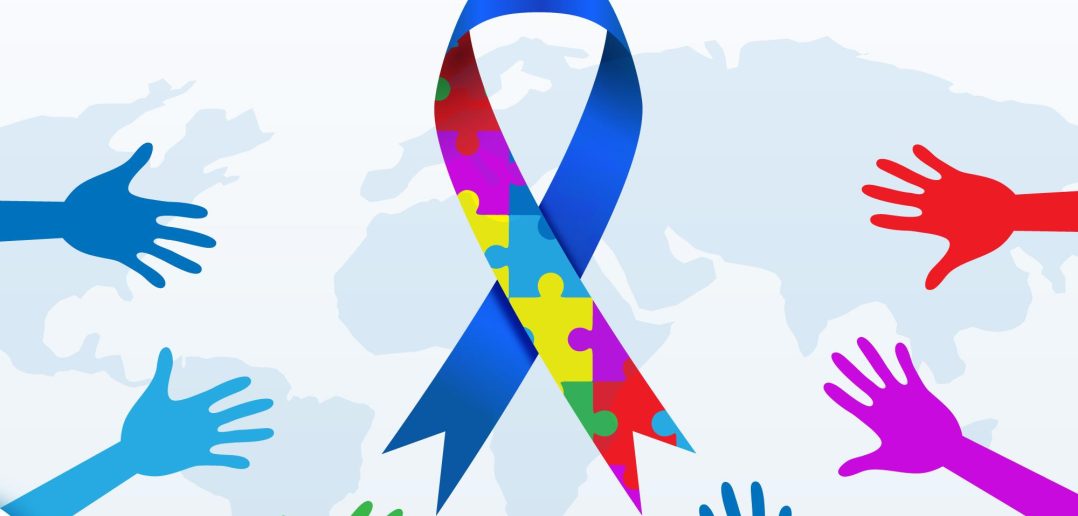
On Sunday 2nd April 2023 is World Autism Awareness Day. This is a day that was established by the United Nations in 2007 to promote a greater understanding of Autism and fund research into methods for improving the health and inclusion of autistic individuals.
Here Alison Hayden, Project Support Coordinator and Mental Health First Aider explains a little more about what is meant by Autism and also shares some of her own personal experiences.
What is Autism?
Medically known as Autism Spectrum Disorder (ASD), it is a developmental disability. People with ASD may behave, communicate, interact, and learn in ways that are different from most other people.
Abilities of autistic individuals can vary significantly, for example, some may be nonverbal, while others have advanced conversation skills. Some need help with every day living where others can live life with little to no support. This is why it is known as a spectrum disorder, no two people with ASD are the same.
Autism can be challenging but also has positive elements to it, such as being able to focus very well and determined to complete any task given, and those with the condition can also be very creative and artistic.
A few examples of challenges that come with Autism are having difficulty recognising or understanding other people’s feelings and expressing their own, finding things like bright lights, loud noises and crowded spaces stressful or upsetting and taking longer than a neurotypical person to understand information.
Terminology
Most autistic people prefer to identify as an autistic person, rather than a person with autism. For example: she is autistic. Some people may say on the autism spectrum. Aspergers is no longer given as a medical diagnosis so is no longer widely used.
People may refer to autism as a condition or neurodevelopmental difference and some people use disability. Negative words such as disorder should be avoided. The terms mild or severe or high or low functioning, are very simplistic and so can be offensive. It may be best to talk in terms of how being autistic affects a person: She is autistic, and says she struggles with the social side of a new job, so we’re offering her a buddy to help her settle in.
Negative language like suffering from autism can be misleading, stigmatising and disempowering. In many cases it is a co-occurring condition, such as anxiety or depression that causes difficulties. It is more appropriate to say struggling with anxiety, for example, rather than struggling with autism.
How being Autistic affects me

I was diagnosed with Autism Spectrum Disorder as an adult in 2017. What led me to this diagnosis was that I was talking with an autistic girl online and felt that what she described about her Autism really resonated with me, and this made me think that I should learn more about it. Prior to this, I knew very little about Autism and the signs and symptoms of it, but whilst researching, I discovered more and more that what I was reading about sounded much like myself.
There are both positives and negatives for me living as an autistic person. I did really well at school, I have always been eager to learn new things and take on new responsibilities with work. I have a very creative mind and for those that know me well, I am often making them smile and laugh with the unusual things that I come up with. I do, however, find it difficult to make friends, I can be terrible at keeping a general social conversation going and I get anxious in new places and with new faces. I also have sensory processing issues, so more often than not, noises that are repetitive, loud or unexpected and lights that are bright or flashing can be overwhelming for me, and I need to escape from it until I settle down.
I talk very openly about being autistic and hope to play my part in helping others to understand what it means. I don’t see it as something to hide or be embarrassed about, it’s just part of who I am.
Autism and Mental Health
According to the autism research charity Autistica, seven out of ten autistic people have a mental health condition such as anxiety, depression, or obsessive-compulsive disorder (OCD).
The following are a few reasons that can lead to poor mental health in those with Autism.
- Individuals can struggle to try to fit into or make sense of the world, which can lead to feelings of depression and anxiety
- They may face delays in getting their mental health problems diagnosed
- They are more likely to face stigma and discrimination
- They are less likely to have the appropriate support available. For example, group therapy might not be suitable for some autistic people, or therapists might not know how to adapt their approach to helping an autistic person
Stigma, a lack of awareness, and lack of appropriate infrastructure (such as office setup or staffing structures) can cause exclusion of people with neurodevelopmental differences. Understanding and embracing neurodiversity in communities, schools, healthcare settings, and workplaces can improve inclusivity for all people. It is important for all of us to foster an environment that is conducive to neurodiversity, and to recognize and emphasize each person’s individual strengths and talents while also providing support for their differences and needs.
How can we help?
There are many ways we can help autistic people so that they don’t feel excluded or discriminated against.
- Ask direct questions rather than vague open-ended questions.
- Do give as much relevant information upfront as possible.
- Share questions in advance, as well as maps and pictures of new environments to help minimise anxiety.
- Don’t expect eye contact. For some it is hard to interpret facial expressions and listening is easier if when they look away.
- Avoid abstract language, sarcasm, or metaphors – some autistic people find these confusing and can take things literally.
- Ask them how they’d like to communicate, an example of this is that they might not like talking on the phone or might find video calls can cause sensory overload.
- Do be patient and understanding. They may take longer to process the meaning of your words, give them a little time if they need it.
- Try to give advance notice if plans are changing and provide a reason for the change, sudden changes to routine can be difficult to process and cause anxiety.
- Be mindful that they may fidget and use fidget toys or may need to get up and walk around
- Try not to have loud conversations with other people whilst standing nearby an autistic person, this can affect concentration and cause sensory overload.