
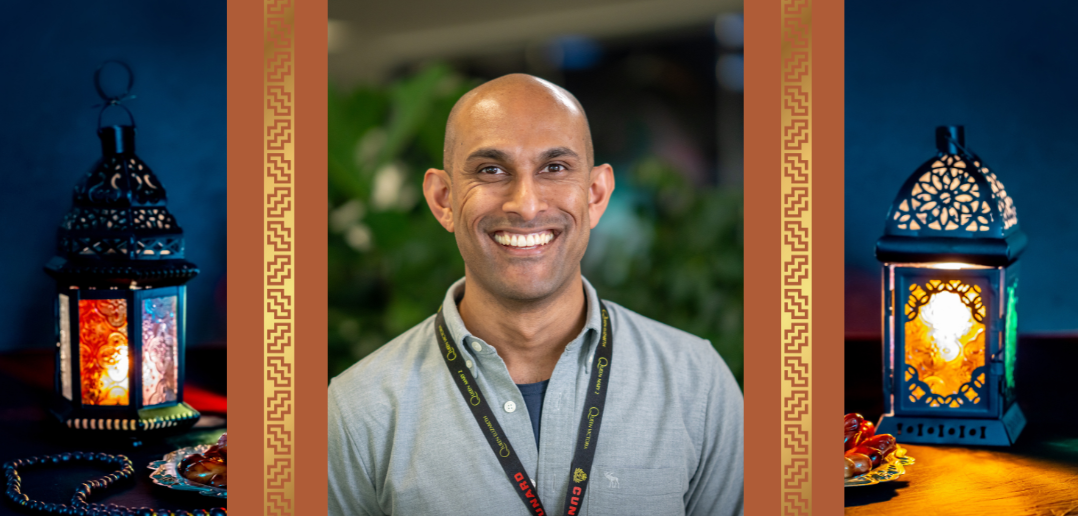
Throughout the holy month of Ramadan, we’re bringing you blogs from colleagues taking part in the month’s activities to help everyone learn a little more.
First up, Tanzin Choudhury, Cunard Customer Journeys Executive, shares his:
“Well, it’s almost the end of the first full week of fasting and the beginning of the Islamic month of Ramadan, and how has it gone?
I always find the first week of Ramadan quite exciting. For me, a highlight is the amount of change involved. Change of diet, change of routines, change of mindset. Change can be fun!
They’re not always big changes either; as I’m not eating or drinking during daylight hours, I haven’t had to queue for coffee in the morning! I’ve also managed to save a few pennies as I haven’t had to buy lunch. For the same reason, I’ve changed my meals in the evening so that I can feel my best – that means opting for healthier, light, nutritious meals instead of a Domino’s ‘Two for Tuesday’ perhaps. That said, I still love pizza!
Now, whilst I don’t mind an early start, I’ve always struggled with getting up before dawn for the Suhoor meal (before the sun rises). I find the disruption to my sleep pattern really hinders my energy levels throughout the day, and unfortunately I can’t just get a shot of caffeine or a sugar boost to perk me up in the mid-afternoon slump. So, as daylight hours are still relatively short at the moment, I haven’t yet had the Suhoor meal, but that’s okay and isn’t a showstopper. This would be very different had Ramadan fallen in the summer months where the daylight hours are particularly long. It’s important to note that Ramadan begins approximately ten days earlier each year, so one can experience the variation of fasting at any time of year.
In the evenings there are extra prayers that are completed in addition to the five Salahs (prayers) each day. These extra prayers are called Taraweeh and can be completed in the Mosque or at home. Muslims will often spend more of their time in acts of worship such as reading The Quran. As one of my goals, this Ramadan, I’ve started to read an English translation to create a better understanding and improve my knowledge. The Quran is traditionally read in ancient Arabic, which can be hard to understand if you don’t know the language.
Whilst there are extra things we fit into our day, there are other things that we might take out or change. For example, I haven’t been completing my gym routine and schedule in the same way that I would normally do. Instead, I have switched it up to include more lighter exercises and incorporated more stretching and mobility activity which I can do at home. And if I want to go to the gym, I can always go later in the evening once I’ve had something to eat and it’s less busy – win!
Social gatherings with friends are also significantly reduced for the month. With what little time is remaining in a very busy period, Muslims will often spend a lot of their free time in prayer, acts of worship and reflection. I’m a social person so this is quite awkward when it comes to managing my social calendar! I basically block out the whole month in my diary and I put a pause on social activities. As with all changes, there are pros and cons to this.
Last year I missed out on attending a friend’s wedding. It was unfortunate, but the logistics of the day just wasn’t feasible (sorry Dan, and happy anniversary!) On the plus side, I do believe there is great benefit found in taking a break, having some ‘me time’ and some self-reflection. Also, we have wonderful platforms such as WhatsApp, social media and video calling to help stay connected!
The last thing I will talk about is the change in mindset – and is probably the most important. We are what we think, and this couldn’t be any more prominent here. During Ramadan, I plan to make conscious effort to maximise good deeds, be kind and generous to those less fortunate. I also intend to avoid behaviours that could be considered immoral. This doesn’t just happen without the shift in mindset and having that intention before Ramadan even begins. This commitment is then worked on throughout the month, with the intention being that it doesn’t stop at the end of Ramadan, but continues throughout the year. I often get described as one who has a calming presence and that I very rarely get angry. Now you know why!
I hope this little snippet has given you some insight into the day-to-day life of someone observing Ramadan. It’s important to note that not all experiences are the same for everyone, this is just a personal account of what it means for me – I hope you enjoyed it!
Why not give fasting a go? Join me! Maybe do a day or two, a week, or if you’re up for the challenge, the rest of the month? If you’re interested, would like to find out more, or have any questions, drop me a message on Teams and let’s catch up.
Peace and love, Tanzin”
Share a good deed to WIN a goody bag!
During the month of Ramadan, together with fasting, prayer and reflection, Muslims also increase their generosity and good deeds to support those less fortunate, and express higher levels of thanks and gratitude for the things they have been able to benefit from.
With this in mind, our employee-led network REACH would like you like you to get involved and tell us your good deed, act of kindness, or gratitude statement for the chance to win a Ramadan goody bag! Click here to enter >.
.
Prize draw is open to all Carnival UK employees and closes on 28 March 2024. Winners will be drawn at random and announced week commencing 1 April 2024.
2 Comments
Really interesting – thanks for sharing, Tanzin!
Many of us are familiar with Ramadan and that it involves fasting, but I wasn’t aware of the meaning behind this or how much is involved. I especially love the effort to maximise good deeds. It’s so interesting to read your experiences, and I agree that you have a calming presence! Thank you for sharing Tanzin!