
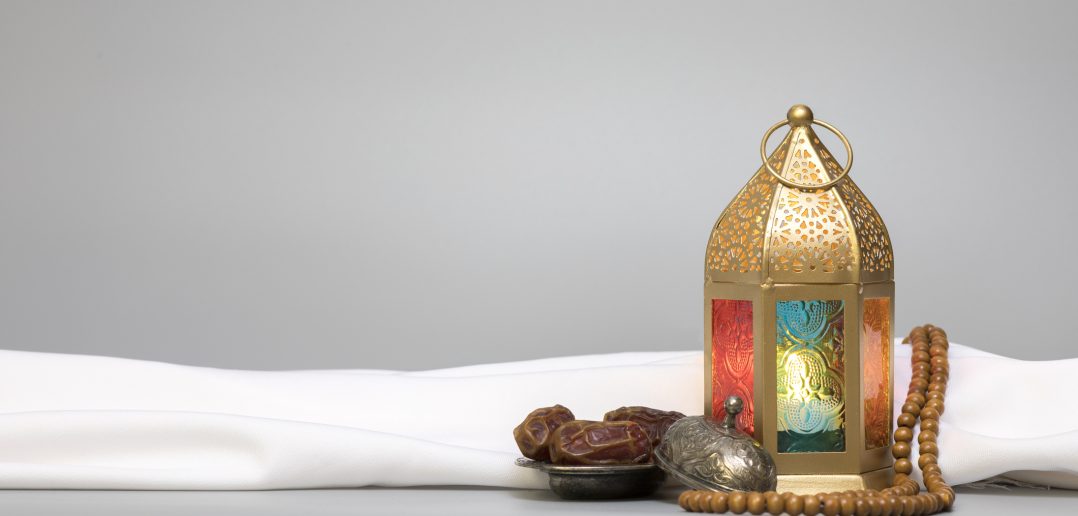
From today, Muslims across the globe are recognising Ramadan, a sacred time for worshipping Allah and remembering the month the Qur’an (holy book) was first revealed to the Prophet Muhammad.
Ramadan is the ninth month of the Islamic calendar. The exact dates of Ramadan change every year. This is because Islam uses a calendar based on the cycles of the Moon. This year in the UK, Ramadan begins this evening and ends on 1 May.
You may already know that throughout the Ramadan period, most adult Muslims fast between dawn and sunset and do not eat or drink during this time, reminding them of the suffering of the poor.
Throughout the Ramadan period, Muslims start their day-time fasting before sunrise with a pre-dawn meal called ‘Suhur’. Then, in the evening, have a joyous breaking of the fast with their family or community during Iftar. There are exceptions to fasting, for example children, and those who are pregnant, ill, elderly or menstruating. If it is possible to do so, Muslims who have missed a few days of the fast make up for it by fasting for the same number of days after Ramadan has ended.
Almost all Muslims try to give up bad habits during Ramadan. It is a time for prayer and good deeds. They will try to spend time with family and friends and help people in need. During Ramadan, Muslims should not listen to music, have sex or smoke. Muslims also try to avoid bad thoughts and actions and focus on prayer, reading the Qur’an and being charitable.
The month of fasting will be celebrated on 2 May, when Eid al-Fitr meaning ‘Festival of Breaking the Fast’ takes place. It will see Muslims host great feasts, give gifts to children and spend time with their closest family and friends.
Supporting our colleagues on board
As well as colleagues ashore, many of our fleet colleagues are Muslim so for the next month will be fasting. To support them through Ramadan, we’re making sure food is available before sunrise (some colleagues will need to wake at around 3am to incorporate a pre-sunrise meal) and after sunset, including a few days after Eid al-Fitr for those who are catching up on days they were unable to fast.
We’re also taking fasting into account if planning any events during daylight hours, and making sure colleagues have time for prayer.