
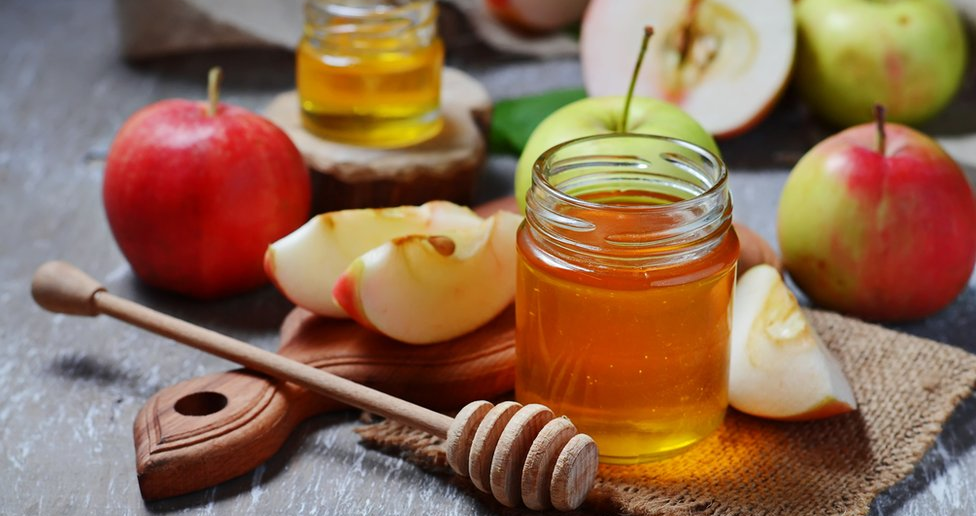
Rosh Hashanah is the Jewish New Year festival; it literally means ‘head of the year’. The festival lasts two days (evening of Monday 6 September to evening of Wednesday 8 September) and commemorates the creation of the world.
Rosh Hashanah is also a judgement day, when Jews believe that God considers a person’s good and bad deeds over the last year and decides what the next year will be like for them. God makes his final judgement on Yom Kippur which means ‘Day of Atonement’.
What does Rosh Hashanah symbolise?
- It’s a celebration of the creation of the world and marks making a fresh start.
- It is a time for people to reflect on the past year and to ask for forgiveness for anything wrong they feel they have done.
- It’s a time for people to think about their priorities in life and what’s important to them.
One of the synagogue rituals for Rosh Hashanah is the blowing of the shofar, a ram’s horn trumpet. A hundred notes are sounded in a special rhythm. The sound of the shofar starts a ten-day period known as the ‘Days of Awe’, which ends with Yom Kippur.
After the Rosh Hashanah service, a special meal is eaten at home, including:
- apples dipped in honey – a symbol of the sweet New Year that each Jew hopes lies ahead
- a sweet carrot stew – symbolising reproduction because in Yiddish, the word for carrot, ‘mern’, has the same meaning
- challah bread in a round loaf, rather than the plaited loaf as served on the Sabbath, symbolising a circle of life and the year
- pomegranate – often seen on the table because of a tradition that pomegranates have 613 seeds, one for each of the commandments that a Jew is obliged to keep
At the meal, Jews dip their first piece of bread in honey and say, ‘May God give me a sweet and happy New Year’.
Yom Kippur means ‘Day of Atonement’ and is the most sacred and solemn day in the Jewish calendar. Yom Kippur is ten days after Rosh Hashanah (evening of Wednesday 15 September to evening of Thursday 16 September).
The ten days between Rosh Hashanah and Yom Kippur are known as ‘Days of Awe’. During these days, Jews think about everything they have done in the past year. If they’ve done something wrong, they can try to put it right, ask God’s forgiveness, and promise not to do it again. The day of Yom Kippur is marked by fasting for 25 hours, wearing white and not wear make-up, perfume or leather shoes. The day is spent in continuous prayer.
Shanah Tovah (Happy New Year) to all colleagues celebrating today!
Information and image as published on BBC and BBCBitesize