

How many hours have you spent sifting through old files, only to find yourself wondering which of the 11 different document drafts is the final version? A report from analyst firm International Data Corporation determined employees spend an average of 4.5 hours per week searching for documents, adding up to hundreds of wasted hours each year. Good records and information management habits can help.
You’ve heard why it’s important to practice good ‘data hygiene’ but you might be surprised to learn it’s easier to do than you think. Even small changes can make a big difference over time.
In addition to the updated records and information management practices, our ABG Global Ethics & Compliance team is rolling out across the Corporation. Here are some easy things you can add to your daily routine to help get you started.
Easy Ways to Get Started
Click on the image to see it in full
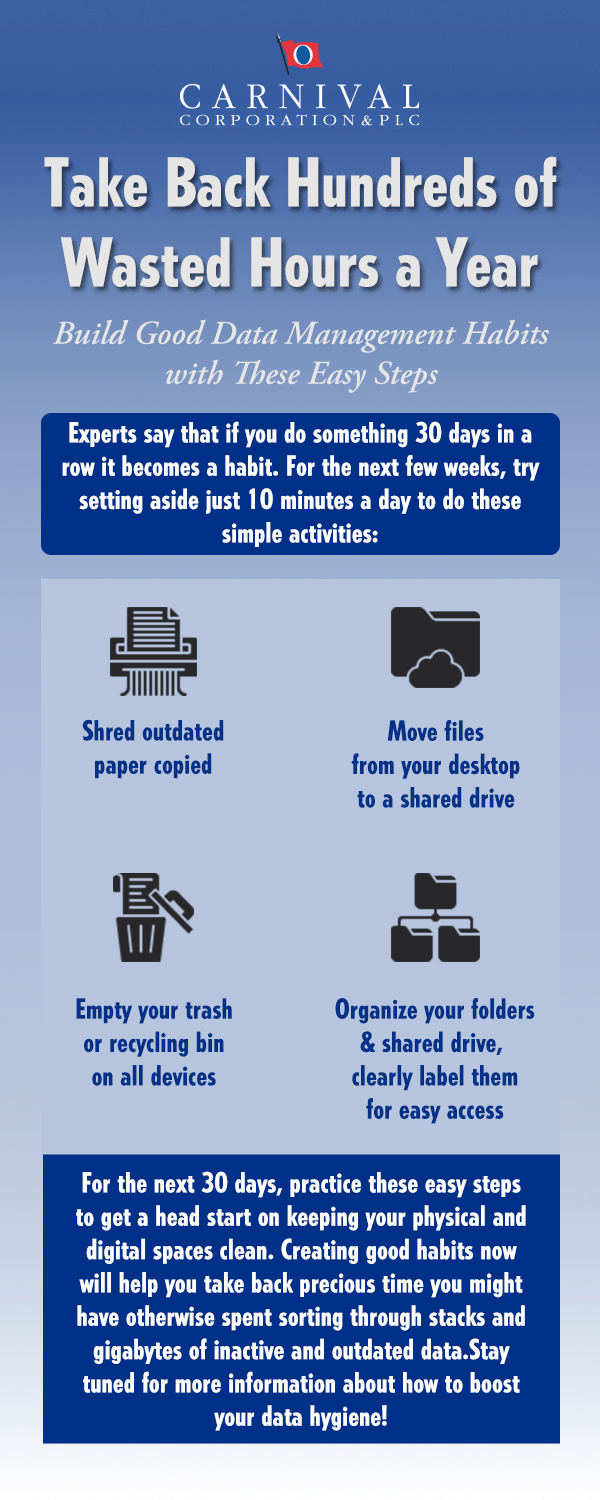
Experts say that if you do something 30 days in a row it becomes a habit. For the next few weeks, try setting aside just 10 minutes a day to do these simple activities to help build lifelong habits that will keep your data and information resources in shipshape:
- Shred outdated or duplicate papers in your file cabinet
- Delete old drafts or extra copies of electronic files
- Clean out your email box – do not forget the sent folder
- Move and back up important files from your computer desktop to a shared drive
- Organise folders and shared drives, and clearly label files for easy identification
- Password protect and encrypt sensitive emails and file share data (like guest manifests)
- Delete inactive file downloads and temporary documents saved on your computer
- Empty your trash or recycle bin on all devices
- When you get new documents, ask yourself, “Do I really need to save, print or copy this?”
For the next 30 days, practice these easy steps to get a head start on keeping your physical and digital spaces clean. Creating good habits now will help you take back precious time you might have otherwise spent sorting through stacks and gigabytes of inactive and outdated data. Stay tuned for more information about how to boost your data hygiene!