
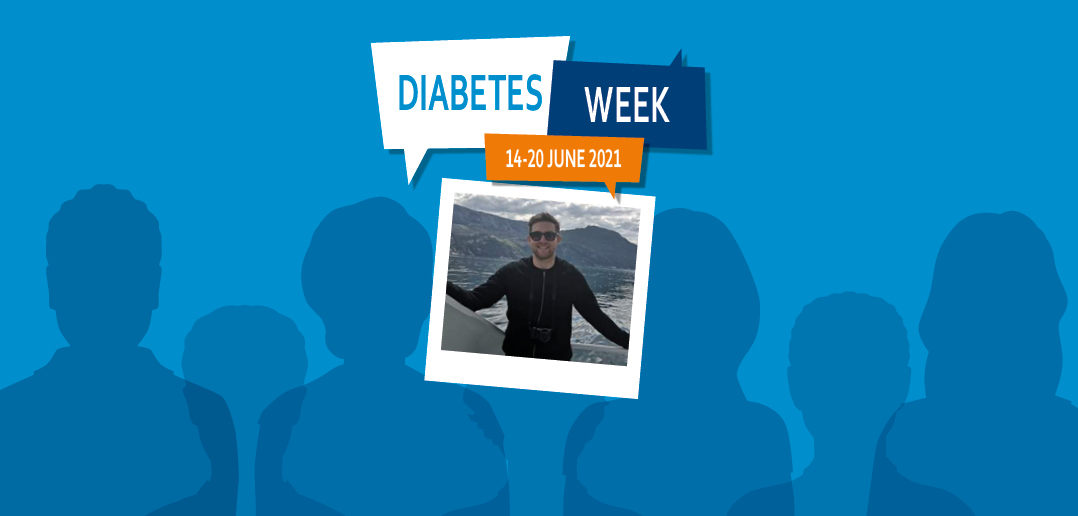
This week it’s Diabetes Week and to help raise awareness of the condition we’re joining in with Diabetes UK #DiabetesStories campaign and sharing real stories from colleagues living with the condition.
We caught up with Thomas Mahoney, Revenue Director – Cunard:
I was diagnosed with Type 1 diabetes when I was 14 years old. It was strange, both my mum and sister had Type 1 diabetes (despite it apparently not being hereditary) so I found the whole transition at that point straight forward. As if I had always lived with it. I say “transition”, as living with Diabetes in my opinion should be considered as a lifestyle shift, rather than some form of ‘diagnosis’ that defines who you are.
At the time, and up until very recently I would have told people that dealing with the transition to living with Type 1 diabetes was a breeze, and I am one of the lucky ones for whom, from a day-to-day control perspective, it really was. However, from day 1 I did my utmost to hide my condition from plain sight. I have always been aware of the stigma that comes with diabetes, of which there are two types. Type 1, where your body is naturally incapable of producing its own insulin and therefore injections are required (of which I have had an estimated 22,000, based on 4 a day for 15 years… ouch). Then Type 2, where your body is incapable of producing enough insulin to control your blood sugar. This is the type most commonly linked to being overweight or inactive. Neither type is worse than the other, nor should come with any kind of stigma – both require a significant lifestyle switches in different ways.
All too frequently the news reports a surge in diabetes as a result of increased obesity rates, without categorising the types. I hate the stigma that this created for diabetes of both types, so over time as I moved from school to college, onto university and then into the workplace, the number of people who knew I had diabetes fell. I vividly remember one of my first classes in college, sat around an entirely new group of people, the teacher (who had diabetes) asked if anybody lived with the same condition and I just sat there quiet as anything (those who know me know that this is rare) not wanting to be defined in that way… ironically it was a psychology class.
As I have matured and genuine life responsibilities have increased, my mindset has begun to shift. Firstly, living with diabetes can be tough. There are loads of factors that impact how well controlled my blood sugar levels are; a small shift in temperature, having a few beers or misjudging my insulin intake can all lead to my blood sugar going either high or low. When my blood sugar is high I become very lethargic, everything seems like a massive effort and a few days of high blood sugars can make me miserable as sin – just ask my other half! On the other end of the scale, when my blood sugar drops low (which is when an immediate intake of sugar is needed to stabilise the blood sugar level) I become very sporadic and can be aggressive, rude or lack focus. I’ve displayed both of these behaviours at work in meetings where not a soul was aware I had diabetes, which on reflection was incredibly irresponsible of me.
I think my shift in attitude to being much more open about living with diabetes has aligned to the increase in awareness and conversation around mental health, knowing I am not the only person to feel they would be or have been stigmatised because of a condition is comforting. As the conversation continues and awareness increases, here’s hoping that stigmas associated with all types of conditions will begin to drop.
I still have to summon significant energy to talk about my diabetes, it does not come easily (writing this has been tough) but I now consider myself as somebody in a position to positively impact others by being open about my condition. If sharing my story encourages just one person to share their own, whatever that may be, then hey we may just be getting somewhere!
For those living with diabetes, both directly or as a result of a friend/family member/colleague having the condition, please please please talk about it. The long term consequences of not effectively managing diabetes are horrid, but entirely avoidable. Technology these days is amazing which goes a long way to help manage the condition, but I personally find that there is nothing more powerful or insightful than a conversation; it can lift a heavy weight off your shoulders – a weight that for me is slowly but surely reducing.
To find out more about diabetes, its causes and symptoms click here.