
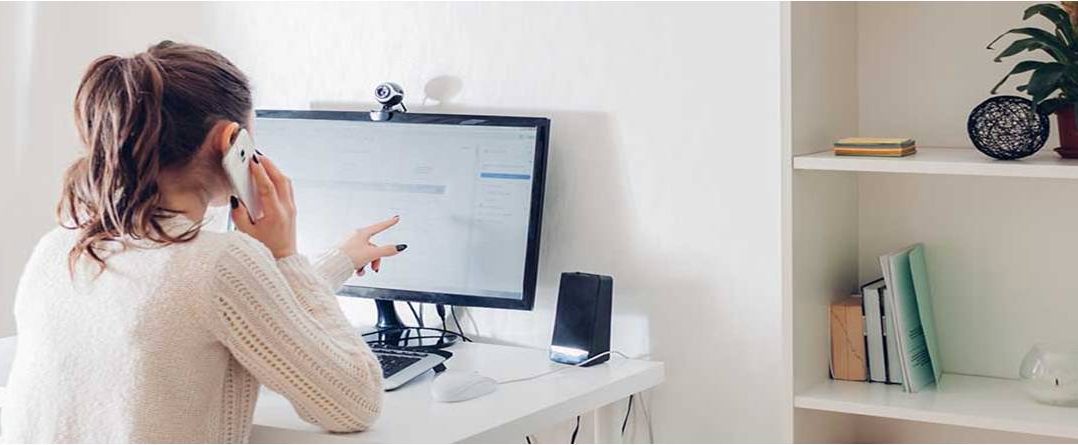
Over the last 12 months our reliance on digital communication has transformed our personal and professional lives. With nearly a year’s worth of remote working now under our belts, we explore some of the positive and negative impacts this may have had on our productivity, along with some great hacks for overcoming challenges.
We know how to use screens for human connection
While we’ve been unable to see people face-to-face we’ve increased the use of our screens by 300 minutes a day – 600 minutes a day is now the average – but we’re using those minutes to connect with our family and friends like never before.
We’ve become more skilled at achieving connection digitally and we’re able to connect more readily and regularly with our closest family and friends. We’re also much better at keeping in touch with our loved ones that live a little too far away for regular face-to-face time.
Our brains are sharper
We’ve had to cope with a lot of change and new ways of doing things so our brains have rewired to cope with new challenges and filter out useless information. We’re focusing on things that impact our immediate day to day such as what we can do under Government guidance and Covid-19 restrictions, and we’re focusing a lot less on things outside of our control.
We know what we want
Is sitting on a train to get to work for several hours a week making us happy? For many of us the last year has been unique as we’ve had the time to reflect and make changes. We’ve realised the importance of making time to do things that make us happy like exercise, planning and sticking to connecting with family and friends, and enjoying a better work life balance.
But…
We keep forgetting things (don’t worry, it’s not just you!)
At the start of the pandemic we put it down to stress and anxiety but the reality of it is, if we do the same things day in and day out, our brains don’t bother to encode them as new events. A lot of us are having the same conversations with the same people in the same environments every day so it becomes harder to distinguish one day (and its detail) from another.
 There are no easy solutions to this one right now but as Covid-19 restrictions are relaxed we’ll have more opportunity to change up our days by choosing where we work from and where we spend our time socialising with others. In the meantime, try walking meetings or calls as an alternative to Zoom and try to do something different each day to add some variety to your week.
We’re struggling to… string a sentence together
We’re communicating largely via digital channels such as email and text rather than face to face conversation, so we’re not using our words as much as we once did. We’re also not engaging in trivial chit chat so our brains have to think less about the words we’re using.
Try to make time for trivial conversation in the day by telling someone three things that happened (no matter how mundane). If you’re working remotely right now, use the first five minutes of your meetings to just talk, check in on one another, share what you’ve been up to – if you were in the office, would you sit on mute until it was time to get down to work?
Our attention spans have become shorter
It’s worse because we’re always on our digital devices – sometimes juggling multiple devices at the same time. When we get back to our regular routines, we’ll have more opportunity to do things that aren’t screen based – a walk with colleagues, a commute to work, queueing for the last flapjack in the Atrium Café… the simplest of things can give our brains time to take a break.
Try setting time for individual tasks and allow yourself the headspace to focus on one thing. Most importantly, put your phone or that second device away, turn it upside down and don’t be tempted to pick it up whilst your focusing.
Our sleep cycles are confused
Our body clocks are all out of sync for two reasons, our routines are thrown out of sorts, and we’re exposed to lots of blue light from our devices throughout the day.
The best thing you can do to reset your body clock is get up and outside first thing in the morning. Your body will recognise that the day has begun, you’ll have a natural break from screens, a head start on your step count before the working days even begun (!) and because your body is able to better regulate itself you’ll be able to enjoy a better quality of sleep in the evenings.
We suffer from ‘away’ guilt
Do you find you run to the kettle and straight back again, feel attached to your email at lunch or consider drastic measures to have a toilet break? You’re not alone… ‘Working from home’ in the way we do now sometimes had negative preconceptions that we still hold onto… if not at your desk what are you doing?
In the office you wouldn’t think twice about popping to the Atrium, engaging in a casual conversation in the corridor or going shopping at lunch as you were still ‘present’. At home that step away from the desk means you are ‘offline’.
Working at home in a purely digital set up can quite often mean we are static at our desks all day, 100 steps is the new target, no walk to the car, the train station, to meetings, the Atrium (even if you did used to take the lift!). Don’t suffer from ‘away’ guilt. Make time to break free from the screen and do something that energises you and contributes to your wellbeing – you’ll find lots of inspiring suggestions in our ‘Let’s talk wellbeing with…’ series of articles on The Insider.
Do you identify with any of these?
If you’re interested in how you can improve your wellbeing, visit our Wellbeing pages on The Insider. To find the pages visit The Insider homepage, select ‘fleet’ or ‘shore’ from the main menu bar, and then select ‘Your wellbeing’.