
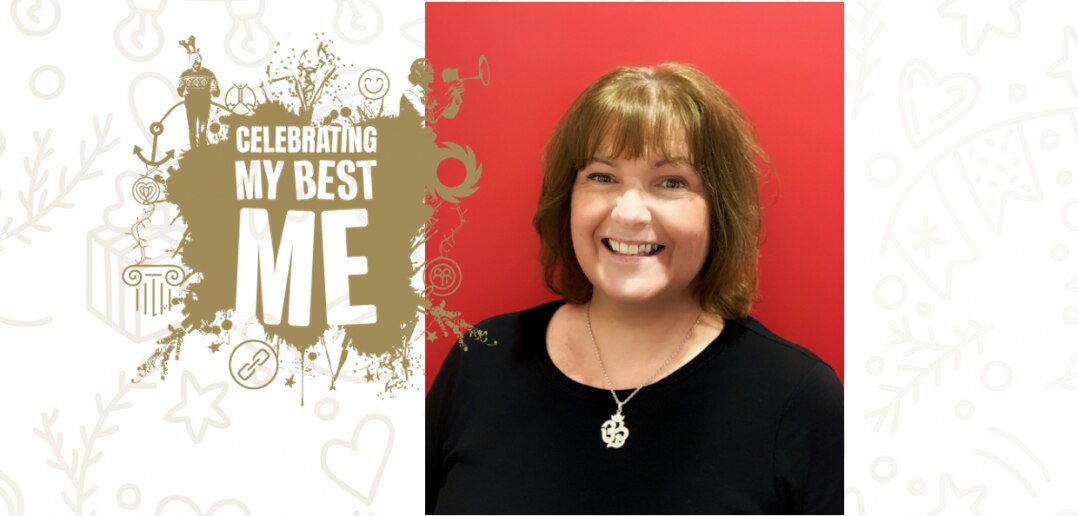
As part of our Celebrating My Best Me season, we’re celebrating the diversity and achievements of colleagues at Carnival UK.
Over the next few weeks we’re sharing people stories from Carnival House and all across our fleet.
Colleague Alyson Ottley, Senior Manager, Medical Operations, tells us about the personal challenge she’s recently overcome…
I’ve been at Carnival UK since 2012 when I relocated from Carnival Australia. I originally trained as a nurse and it’s my healthcare background that’s enabled me to do the job I do – my team manages the fleet’s 60+ nurses, sets clinical governance and supports Guests with declared medical conditions pre and post cruise.
From able to disabled
I’d always been fit and healthy. I walked everywhere, kept myself active and was in general good health. Then the pain in my hips started. It gradually got worse. I was in constant pain. I thought it was from a bad back, but in 2015 I was diagnosed with severe arthritis in both hips.
The arthritis was debilitating. I had to use a stick to walk and every step was excruciatingly painful. I don’t drive so I had to start catching a taxi from Southampton train station to the office. Walking around the office was incredibly difficult. On very bad days my 10 minute walk home from the train station took over half an hour. Standing to cook was too painful. Everything I’d taken for granted became a daily struggle. I’d gone from able bodied to disabled.
Adjustments to office life
Through Occupational Health and my HR Business Partner, Carnival UK definitely supported me during my disability, and after my operations I was supported to do a phased return to work hours. But I wouldn’t have been able to carry on in Carnival House if it wasn’t for my colleagues.
For meetings everyone happily came to me. I’d always be asked if I wanted anything from the kitchen or atrium when colleagues were going that way. They’d collect things off the printer for me. When I first came into the office with my stick, a colleague (who I admire for their sense of style) commented on my “cool walking stick” instantly putting me at ease.
It wasn’t all plain sailing though. Asking for help was demoralising. Catching the lift up one floor I always felt apologetic. I wasn’t able to attend active away-days. My hips became the only topic of conversation with colleagues. (I was doing a Masters in Medical Law and Ethics at the time and was rarely asked about this). I lost my sense of self. My disability defined me.
Why we have to discuss disability
I’m on the road to recovery now. I’ve had both hips replaced and walk without a stick. Having a temporary disability is something I hope never to go through again, but what I learnt through the experience is something I hope I’ll never forget.
- Make the workplace work – get to know your colleagues. Share information about yourself. A distracted colleague in a meeting might be battling chronic pain or worrying about an ill relative at home. (I recently burst into tears while working on a difficult project. My colleague asked if there was something else upsetting me. My mum in Australia was very ill at the time and he recognised that there could have been another reason for my tears and was so understanding.)
- Declare a disability – Carnival UK does care. If you have a disability they’ll support with reasonable adjustments. But if they don’t know, they can’t help. Read Amy’s blog to find out how to update your personal details.
- Not all disabilities are visible – if you need to catch the lift one floor don’t apologise for it. And if a colleague does, don’t comment on it.
- You might mean well – I was happy to talk about what I was going through which meant people felt comfortable talking to me about it too. However I didn’t want a conversation about it in a public area or for it to be the only subject we discussed. Respect your colleagues and have considerate conversations.
- Always be inclusive – a stand up meeting might be painful for someone with a bad back. Meeting in the Atrium could be a challenge for someone who is hard of hearing. Using the whiteboard could be difficult for someone with dyslexia. A social event in the pub might not be enjoyable for a tee-total colleague.
Having a temporary disability has changed my perspective and perceptions. That’s why I’ve joined the Inclusion Steering Group to share my experiences and represent disabled colleagues.
I want to make sure we discuss disability so if you want to share your story, make suggestions for change or seek advice, please feel free to talk to me in confidence. Remember your line manager and Occupational Health are also there to support you however they can.
1 Comment
Thanks for sharing your story Alyson! it is so important to see the person behind any condition. The tips you shared are invaluable, thank you.